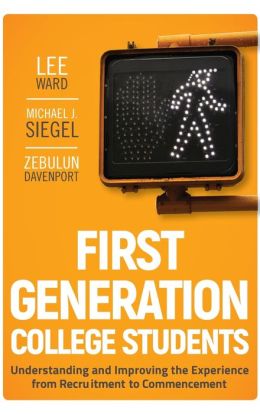
- Ward, Lee, Michael J. Siegel, and Zebulun Davenport. First-generation College Students: Understanding and Improving the Experience from Recruitment to Commencement. San Francisco: Jossey-Bass, 2012. Print.
(3) Summary
- The book researches the challenges first-year students face and how to conquer them. It introduces the definition of a first-generation college student and follows their life through college. Also, it highlights class, cultural, racial, and ethnic differences of first-generation students.
(4) Author(s)
- Lee Ward Director of career and academic planning at James Madison University. He is knowledgeable about first-generation college students because he plans sustaining effective learning environments.
- Michael J. Siegel Associate professor and director of the administration of higher education program at Suffolk University. He is knowledgeable, as he has several publications about "campus culture" such as first college year, engagement, and learning
- Zebulun Davenport Vice chancellor for student affairs at Indiana University-Purdue University Indianapolis. During his pursuit of an EdD, he focused on the retention of underrepresented students on campus. He is acquainted with the "environments, differences, and challenges minority students encounter."
(5) Key terms
- demographic characteristics- information that defines a population depending of factors varying from race to area of residence
- self-efficacy-the individualized view of one's own ability to succeed
(6) Quotes
- "...students whose parents did not attend are generally less prepared for the college experience than students whose parents attended college but did not necessarily receive a degree"(Ward 4).
- "In addition to the enrollment patterns and deficit in parental support, where first-generation students attend college is of equal importance" (Ward 27).
- "Navigating campus culture, understanding the language of the college campus, knowing the value of engagement, and having a catalog of educational coping skills passed down from one generation to the next are important ingredients in student success that are often lacking for first-generation students" (Ward 106).
(7) Value
- The reading provides many great insights about first-generation students' challenges. It provides a good basis for me to research whether there really is a significant disadvantage. The book seems to tie in themes of individualization and effect of isolation on academic performance (it references Tinto). Also, the authors are well-acquainted with the subject. The book seems to be a very relevant source for my research.

No comments:
Post a Comment